Markets we serve

Rural, Farm & Vacant Land

Thinking about severing a parcel, building on a rural lot, or buying vacant land? The costly surprises — septic feasibility, water supply, setbacks, conservation-authority limits — tend to surface late, after the money is committed. We give you a clear read on what the land can actually support first, so you buy and build with your eyes open.

Overview

Know what the land can support

Rural lots vary enormously from one property to the next. Septic feasibility, well water supply, soil conditions, floodplain, and setbacks such as Minimum Distance Separation from livestock all shape what β€” and whether β€” you can build. We evaluate these up front so there are no expensive surprises.

The biggest risk on rural land is what you don’t know is there — and the earlier we look, the more we can steer. A pre-purchase feasibility review can tell you whether a lot can even be severed, serviced, or built on before you’re committed to it; full design and permitting follow once the path is clear. We explain what drives each answer in plain language, so a non-technical owner can make the call with confidence.

What makes or breaks a rural lot

  • Septic feasibility
    Soil (T-time) testing and design for a private sewage septic system.
  • Water supply
    Well supply, water-quantity and quality assessment.
  • Access & grading
    Entrance, culvert, and lot grading design.
  • Setbacks & hazards
    Minimum Distance Separation (MDS), floodplain, natural heritage, forests, wetlands, and conservation-authority constraints.

Not sure yet what your land can support?

That’s exactly when to call. Before you commit to a purchase price, a severance, or a building envelope, we can tell you what the site will actually allow — septic feasibility, water supply, setbacks, and conservation-authority limits — and flag the issues that derail rural projects late. Far better to know on day one than after closing.
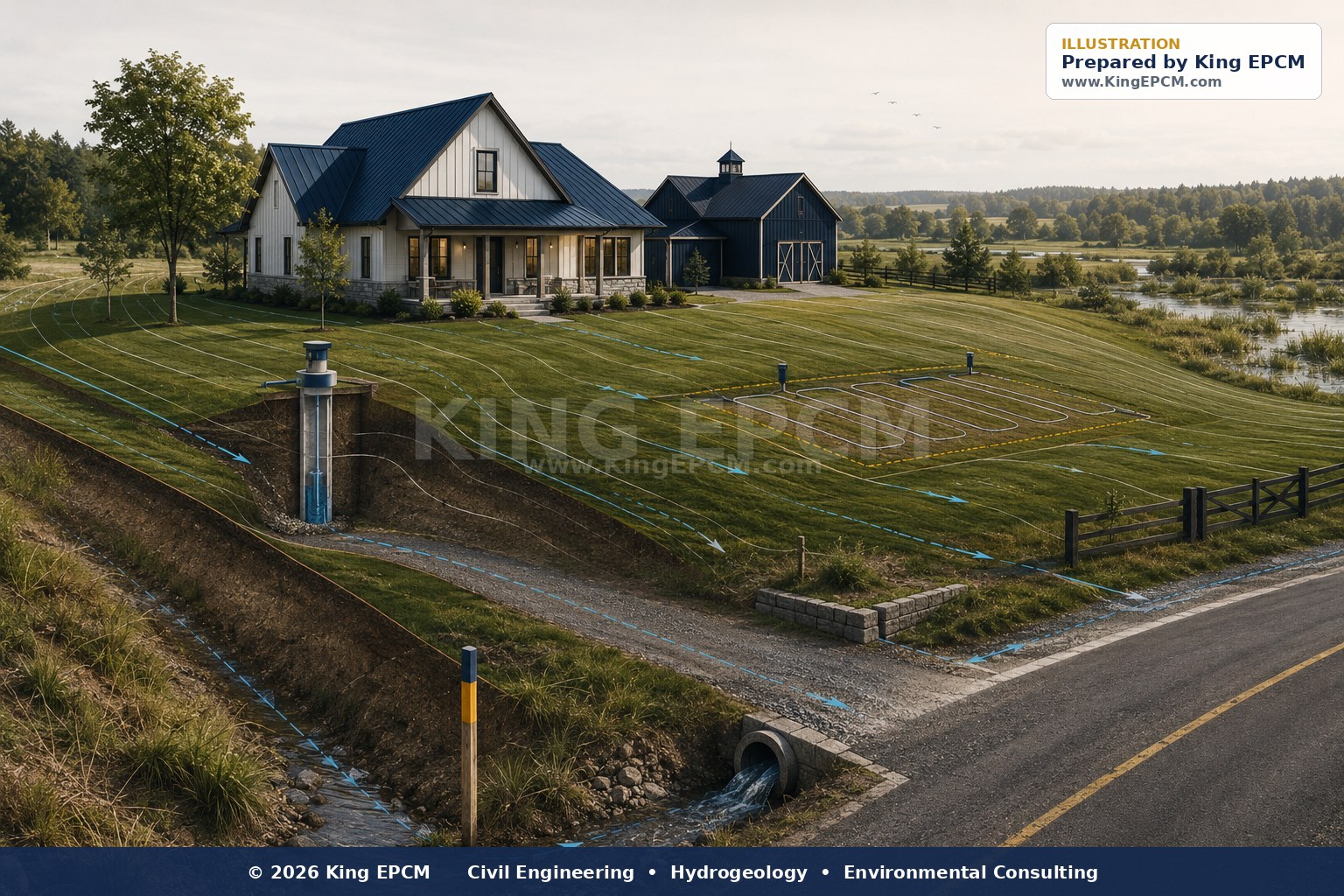
Illustration of Southern Ontario rural land β€” open fields with a farmhouse and barn, a private well and septic area, a driveway with a culvert, and a property-line marker β€” showing what to assess before buying or building on unserviced land.
Know the land before you commit — severance, septic and well feasibility, setbacks, and conservation screening on rural and vacant land.
What we provide

Common services for rural & vacant land

Specific deliverables we routinely provide for this market.

Where we help

Common issues & when to call us

Is this rural lot even buildable?

We review septic feasibility, water supply, access, and hazards up front so you know before you close or commit to a design.

The soil is clay or the water table is high β€” can I still get a septic system?

Usually yes, with the right design. We test the soil and confirm options such as a filter bed, raised bed, or shallow buried trench.

There's a livestock operation nearby β€” does that affect me?

It can. Building near livestock facilities triggers Minimum Distance Separation (MDS) setbacks. We calculate them and check your siting.

I'm severing a lot β€” what engineering do I need?

We provide the grading, servicing, septic, and technical support that severance or consent conditions require.

← Back to all markets
Learn more

Related guides & resources

We're building a library of plain-language technical guides. Here's what's relevant so far β€” more are on the way.

Buying or building on rural land?

Tell us about your project and we'll point you to the right scope β€” and a fast, clear quote.

Request a Quote